What Is Parametric Architecture? The Definitive Guide for Real Estate Developers
2026-03-15 · 14 min read · David Serrano
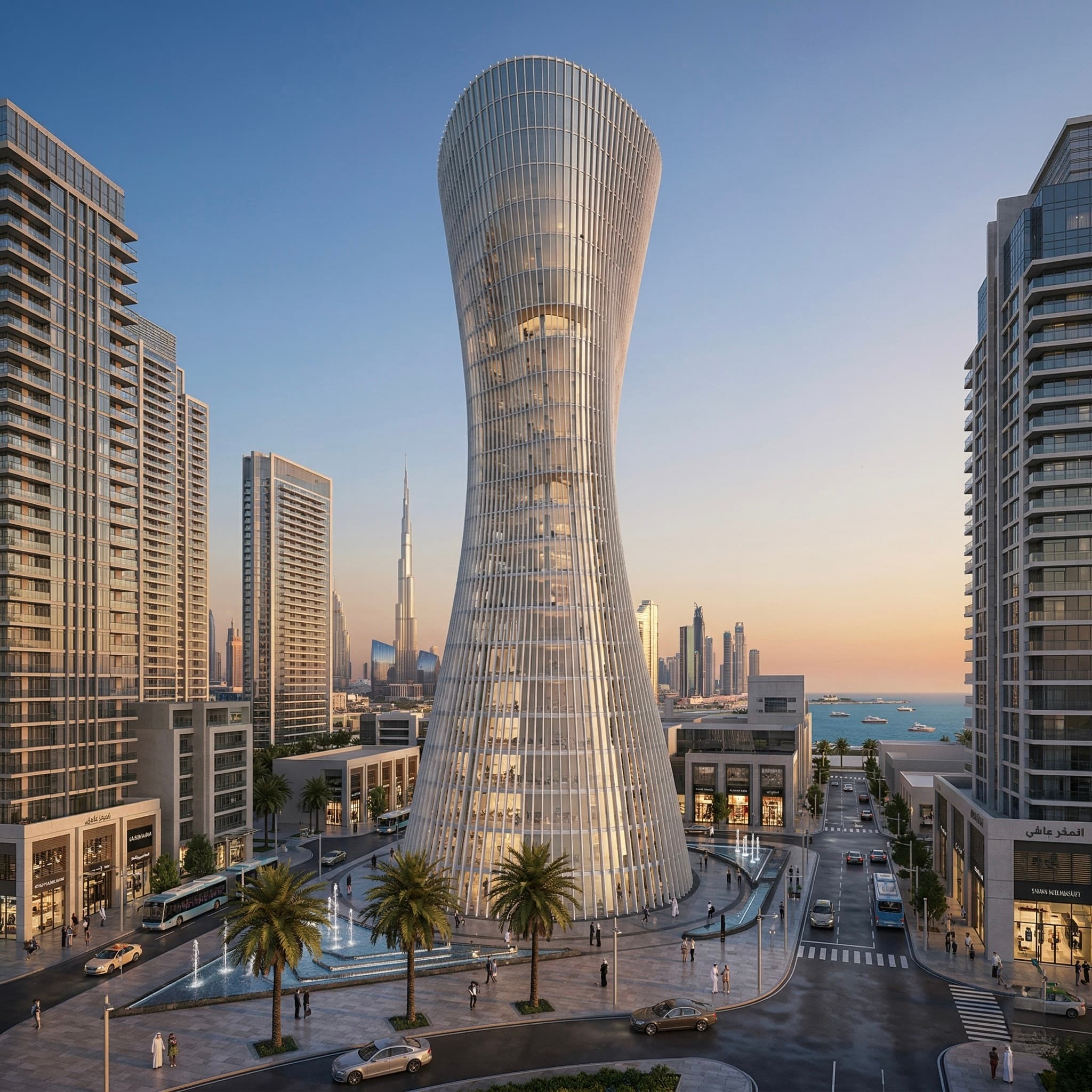
What Is Parametric Architecture?
Parametric architecture is a computational design methodology where building geometry is generated through algorithmic rules and variable parameters rather than fixed forms. Instead of manually drawing each element, architects define relationships between design variables — solar angle, wind load, structural stress, view corridors, occupant density — and algorithms generate optimized geometry that responds to all constraints simultaneously. The resulting forms are mathematically precise, performance-driven, and impossible to achieve through conventional drafting. In real estate development, parametric design has emerged as the primary methodology for creating high-performance facades, bioclimatic envelopes, and spatially complex structures that command measurable price premiums.
The term "parametric" derives from "parameter" — a variable that defines a system's behavior. In parametric architecture, changing any input parameter (site orientation, floor-area ratio, climate data, structural material) automatically regenerates the entire design. This makes it possible to evaluate thousands of design variations in hours rather than weeks, selecting the optimal solution based on quantifiable performance criteria.
Parametric architecture is not a style. It is a process. The output can range from flowing organic facades to precise geometric lattices, depending on the parameters that drive the design. What unifies all parametric work is that every form has a reason rooted in data.
How Parametric Design Works: The Algorithmic Process
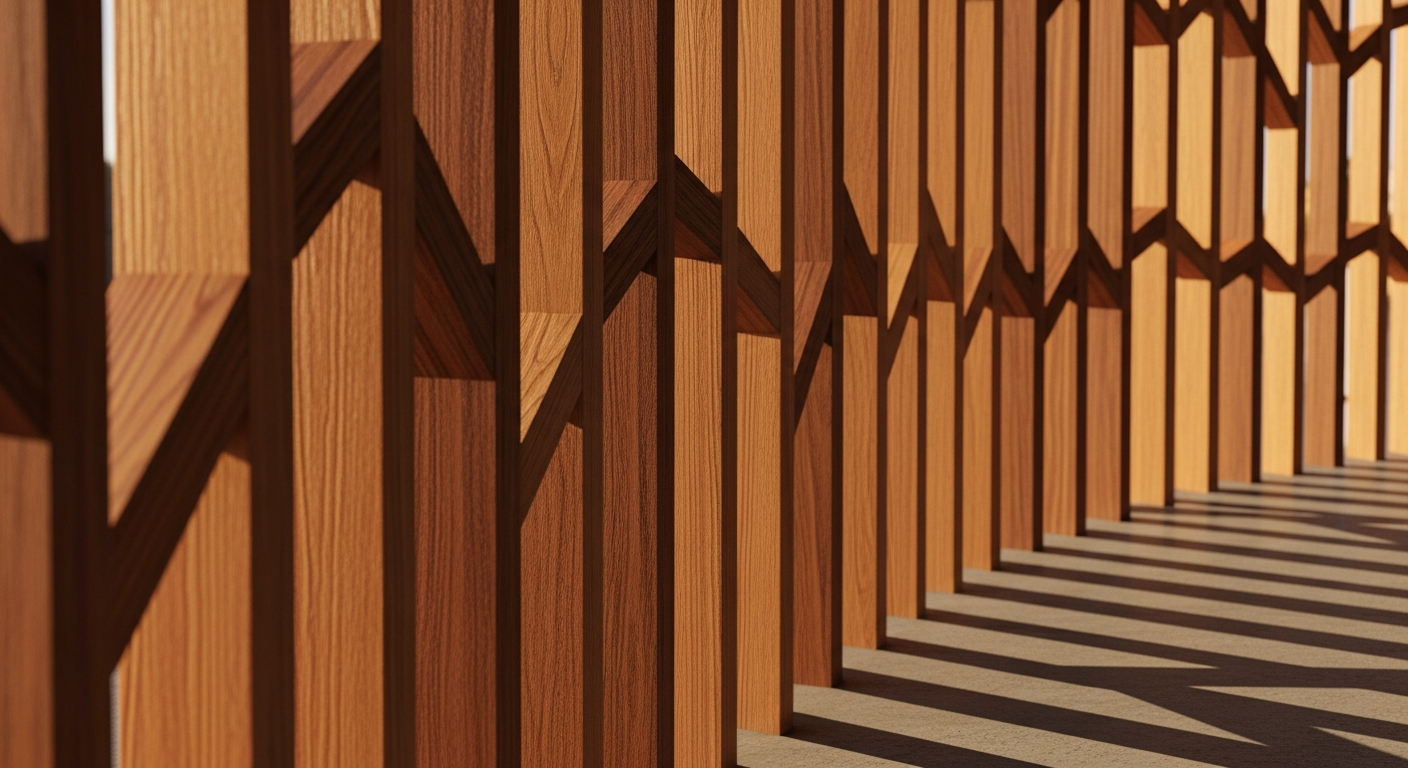
Parametric design operates through a defined workflow that transforms site data into optimized building geometry. Understanding this process is essential for developers evaluating whether parametric architecture fits their project.
1. Data Collection and Parameter Definition
Every parametric project begins with data. The design team collects and digitizes site-specific information:
- Solar analysis: Annual sun path, radiation intensity per facade orientation, shadow patterns from adjacent structures
- Wind analysis: Prevailing wind directions, seasonal velocity patterns, turbulence zones at street level
- View corridors: High-value sight lines, privacy requirements between units, visual connections to landmarks or landscape
- Regulatory constraints: Setbacks, height limits, floor-area ratio, required green space
- Program requirements: Unit mix, floor plate efficiency, amenity adjacencies, circulation ratios
2. Algorithm Development
Using visual programming environments (Grasshopper for Rhino, the ARCHICAD-Grasshopper Live Connection, or custom Python scripts), designers create algorithmic definitions that encode the relationships between parameters. For example, a parametric facade algorithm might define each panel's angle as a function of solar incidence at that specific point, the desired interior daylight level, and the structural load capacity of the support system.
3. Generative Exploration
The algorithm generates hundreds or thousands of design variations by systematically modifying input parameters. Each variation is evaluated against performance criteria — energy consumption, daylighting levels, structural efficiency, construction cost, view quality. This is where parametric design delivers its greatest advantage: the ability to explore a design space that would be impossible to navigate manually.
4. Optimization and Selection
Multi-objective optimization algorithms (such as evolutionary solvers) identify the Pareto-optimal solutions — designs that represent the best possible trade-offs between competing objectives. The design team and developer then select from this optimized set based on project priorities.
5. Fabrication and Documentation
Parametric models generate precise fabrication data — CNC cutting paths, panel schedules, connection details — directly from the design model. This digital-to-fabrication pipeline reduces errors, minimizes material waste (typically 15-20% less waste than conventional construction), and enables complex geometry that would be prohibitively expensive to detail manually.
The Business Case: Why Developers Choose Parametric Architecture
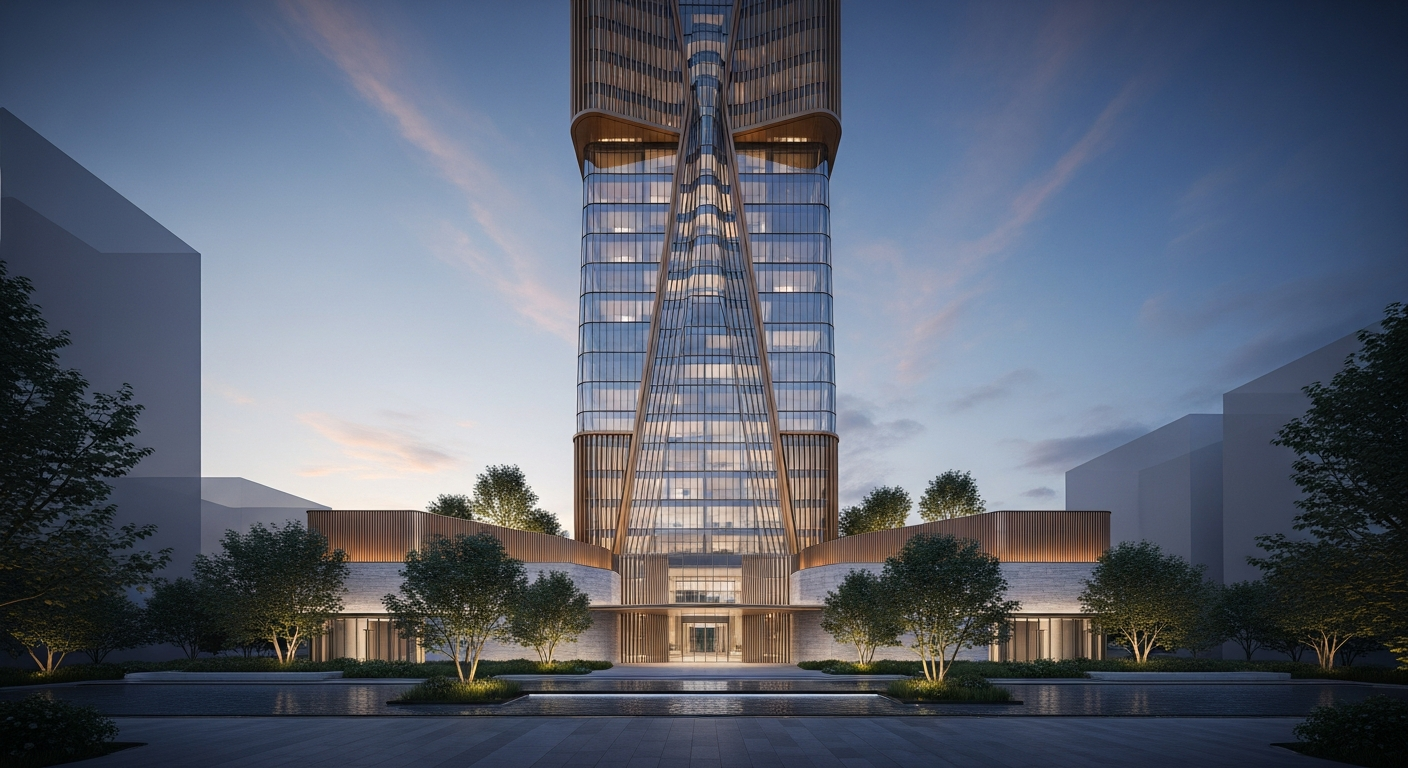
For real estate developers, parametric architecture is not an aesthetic choice — it is a financial strategy. The data consistently shows that parametric design delivers measurable returns across four dimensions.
Sale Price Premium
Developments with distinctive parametric facades sell at a premium of 8-17% above comparable market prices, according to research by ISE Facade Consulting. This premium is driven by visual differentiation, perceived quality, and the "landmark effect" — buyers pay more for buildings that are recognizably unique. In markets like Dubai, Abu Dhabi, and Mexico City's premium corridors, facade differentiation is the single largest driver of price per square meter above baseline.
Wellness Premium
Buildings designed with evidence-based wellness principles — circadian lighting, biophilic geometry, optimized acoustics, and thermal comfort — command 20-30% higher prices per square meter, according to the Global Wellness Institute and the International WELL Building Institute. Parametric design is the most effective methodology for integrating these wellness factors because it can simultaneously optimize multiple environmental variables that affect occupant well-being.
Operating Cost Reduction
Parametric bioclimatic envelopes — facades and roofs designed algorithmically to respond to solar and wind conditions — reduce HVAC operating costs by up to 35%. In GCC markets (UAE, Saudi Arabia, Qatar), where cooling accounts for 60-70% of building energy consumption, parametric solar shading systems reduce cooling loads by up to 45%. This translates directly into lower operating expenses, higher net operating income, and improved cap rates for the asset.
Absorption Velocity
Parametric buildings sell faster. The ISE Facade Consulting research indicates that developments with distinctive facades reduce average selling time by 23% compared to conventional designs in the same market. Faster absorption means reduced carrying costs and earlier return on investment for the developer.
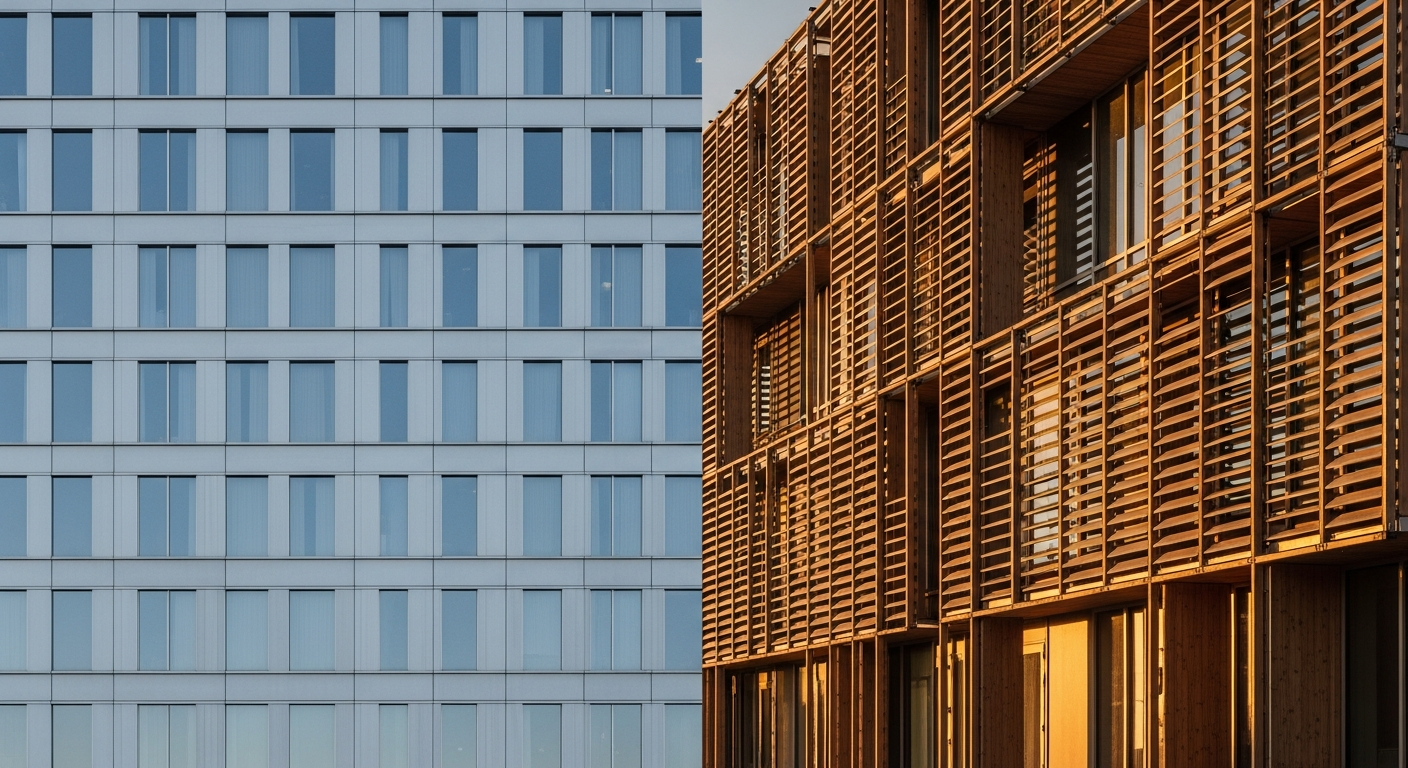
Parametric vs. Traditional Architecture: Developer Comparison
| Criteria | Traditional Architecture | Parametric Architecture |
|---|---|---|
| Design Fee | 6-8% of construction cost | 8-12% of construction cost |
| Design Timeline | 4-6 months (schematic to DD) | 3-5 months (faster iteration) |
| Facade Cost Premium | Baseline | +10-25% facade cost |
| Sale Price Premium | Baseline | +8-17% above market |
| Wellness Premium | 0-5% (if WELL certified) | +20-30% (integrated design) |
| OPEX Reduction | 0-10% (code compliant) | -25-35% (optimized envelope) |
| Absorption Speed | Baseline | 23% faster on average |
| Design Variations Explored | 3-5 options | 500-5,000+ options |
| Material Waste | Industry standard | 15-20% less waste |
| Net ROI (5-year) | Baseline | +40-85% over design cost differential |
Parametric Design Market: Size, Growth, and Projections
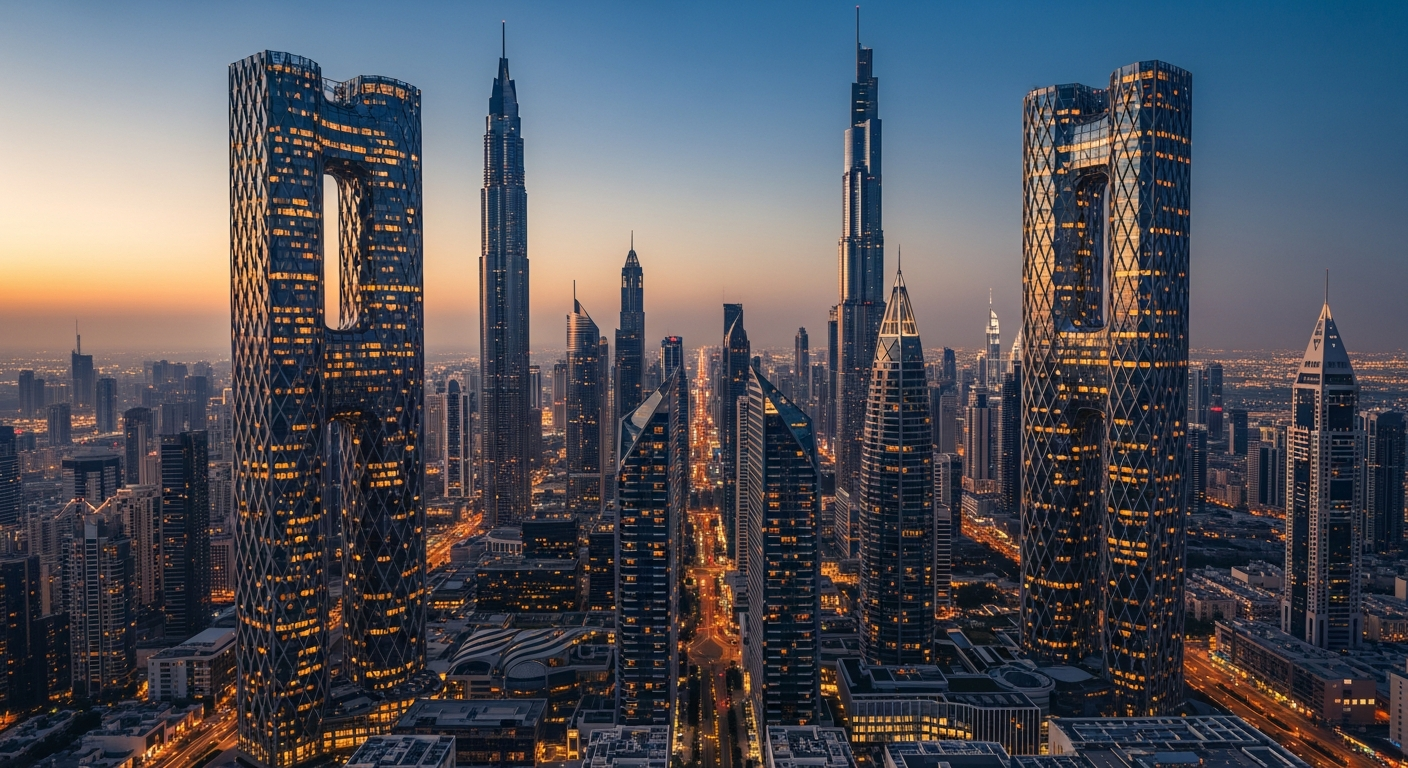
The global parametric design market reached $15.99 billion in 2026 and is projected to grow to $29.74 billion by 2035, representing a compound annual growth rate (CAGR) of 7.1%. This growth is driven by three converging trends:
- Computational power: Cloud computing and GPU acceleration have made real-time parametric optimization accessible to mid-size firms, not just global practices with dedicated research teams.
- Sustainability mandates: Building performance regulations in the EU, GCC, and increasingly in Latin America require the kind of facade and envelope optimization that parametric design delivers most efficiently.
- Developer demand for differentiation: In saturated premium markets (Dubai, Miami, Mexico City), buyers have abundant choice. Parametric architecture creates the visual and experiential differentiation that drives purchase decisions.
Key Market Segments
- Premium residential towers: The largest segment by revenue, driven by facade differentiation and wellness premiums in markets like Dubai, Abu Dhabi, Singapore, and Mexico City
- Commercial office: Parametric facades reduce energy costs and support ESG certifications (LEED, WELL, BREEAM) that institutional tenants require
- Hospitality: Hotels and resorts use parametric design to create signature architectural experiences that drive brand value and room rate premiums
- Cultural and institutional: Museums, performing arts centers, and government buildings use parametric design for acoustic optimization, structural efficiency, and iconic form
Regional Hotspots
The GCC region (particularly UAE and Saudi Arabia) leads in parametric architecture adoption per capita, driven by Vision 2030, NEOM, and the region's appetite for architectural differentiation. Latin America is an emerging market for parametric architecture, with premium developments in Mexico City, Monterrey, and Querétaro increasingly adopting computational design to differentiate in competitive segments.
Software and Tools Used in Parametric Architecture
Parametric architecture relies on specialized software that connects geometric modeling with algorithmic logic. The primary tools used in professional practice include:
Core Modeling and Scripting
- Rhinoceros 3D + Grasshopper: The industry standard for parametric design. Rhino provides the NURBS modeling environment, and Grasshopper (its visual programming plugin) allows designers to create algorithmic definitions without writing code. Over 80% of parametric architecture firms use this combination.
- ARCHICAD + Grasshopper (via Rhino-ARCHICAD Live Connection): For projects requiring full BIM integration from parametric design through documentation. ARCHICAD's Live Connection to Rhino enables a seamless round-trip between parametric modeling in Grasshopper and BIM documentation in ARCHICAD — geometry flows bidirectionally without export/import steps.
- Houdini (SideFX): Originally developed for visual effects, Houdini's procedural modeling capabilities are increasingly used for complex parametric facades and environmental simulations.
- Python and C# scripting: For custom algorithms, optimization routines, and integration with machine learning models. Custom scripts extend the capabilities of Grasshopper and Dynamo.
Analysis and Simulation
- Ladybug + Honeybee (Grasshopper plugins): Environmental analysis tools for solar radiation, daylighting, thermal comfort, and energy modeling directly within the parametric design workflow
- Karamba3D: Real-time structural analysis plugin for Grasshopper that enables form-finding based on structural performance
- Kangaroo Physics: Physics simulation engine for form-finding, membrane structures, and tensile designs within Grasshopper
- CFD tools (Butterfly, OpenFOAM): Computational fluid dynamics for wind analysis and natural ventilation studies
Optimization
- Galapagos and Octopus: Evolutionary solvers within Grasshopper for single-objective and multi-objective optimization
- Wallacei: Advanced multi-objective optimization with analytics dashboard for parametric design
Fabrication
- KUKA|prc and HAL Robotics: Robotic fabrication plugins that generate toolpaths directly from parametric models
- Elefront and Lunchbox: Panelization and rationalization tools that convert complex parametric surfaces into fabrication-ready components
Parametric Architecture and Sustainability
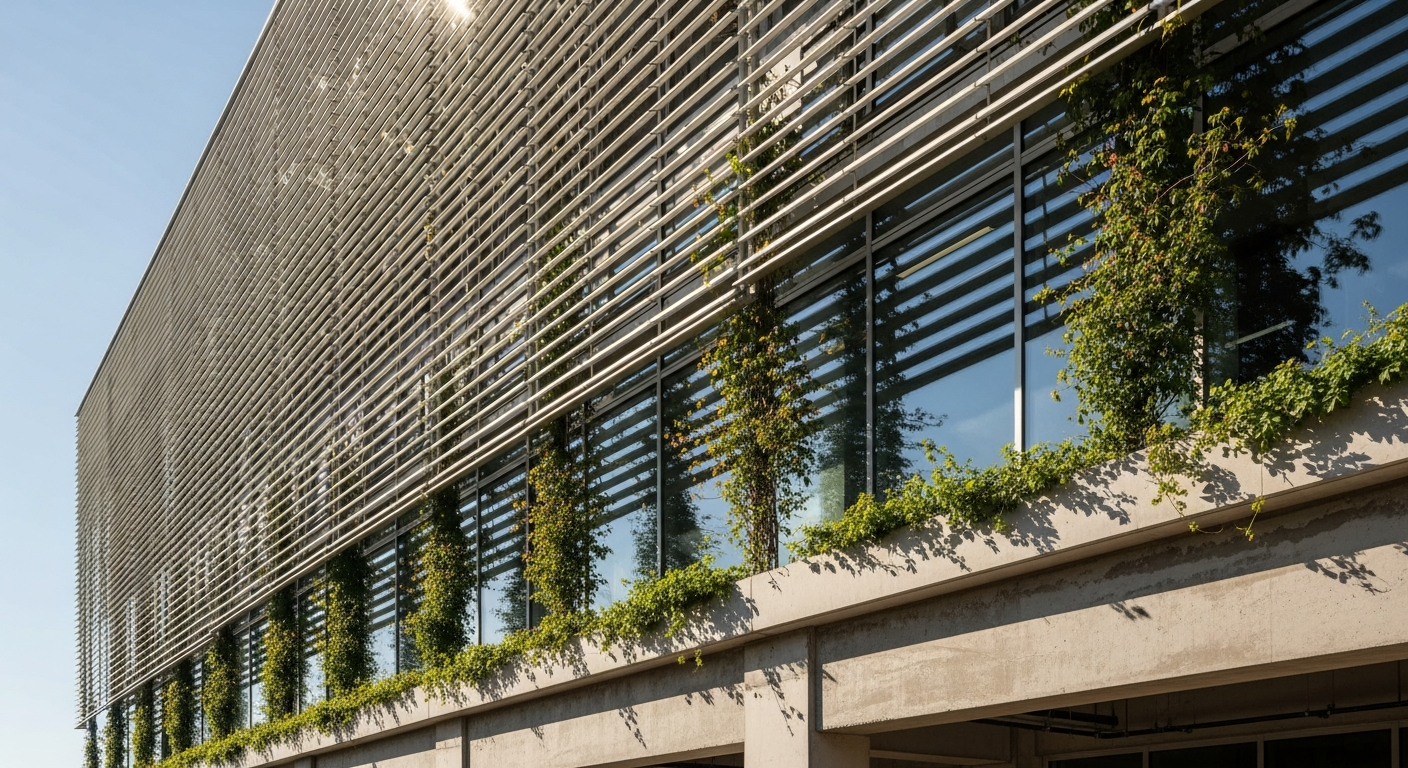
Parametric design is inherently sustainability-oriented because it optimizes building performance based on environmental data. Rather than applying sustainability as an afterthought (adding solar panels to a conventionally designed building), parametric architecture embeds environmental performance into the building's fundamental geometry.
Energy Performance
Parametric facades and envelopes are designed to respond to site-specific solar and wind conditions. The result is measurably better energy performance:
- 25-35% reduction in HVAC energy consumption through optimized solar shading and natural ventilation
- 40-60% improvement in daylighting uniformity through parametric aperture optimization, reducing artificial lighting demand
- 45% reduction in cooling loads in hot climates (GCC, tropical regions) through adaptive solar shading systems
Material Efficiency
Parametric structural optimization reduces material consumption while maintaining or improving structural performance:
- 15-20% reduction in structural material through topology optimization and form-finding
- 15-20% less construction waste through precise digital fabrication and optimized cutting patterns
- Reduced embodied carbon through material optimization and the use of computationally efficient structural forms
Certification Support
Parametric design contributes points across multiple green building certification systems — LEED, WELL, BREEAM, Estidama (UAE), and EDGE — by providing quantifiable performance data for energy, daylighting, thermal comfort, acoustics, and material efficiency.
"Sustainability in parametric architecture is not an add-on — it is the starting condition. When you design from solar data, wind data, and occupant comfort data, the building is inherently high-performance. The geometry is the sustainability strategy," says David Serrano, Founder of Arquitectura Introspectiva.
Parametric Design vs. Generative Design: What Is the Difference?
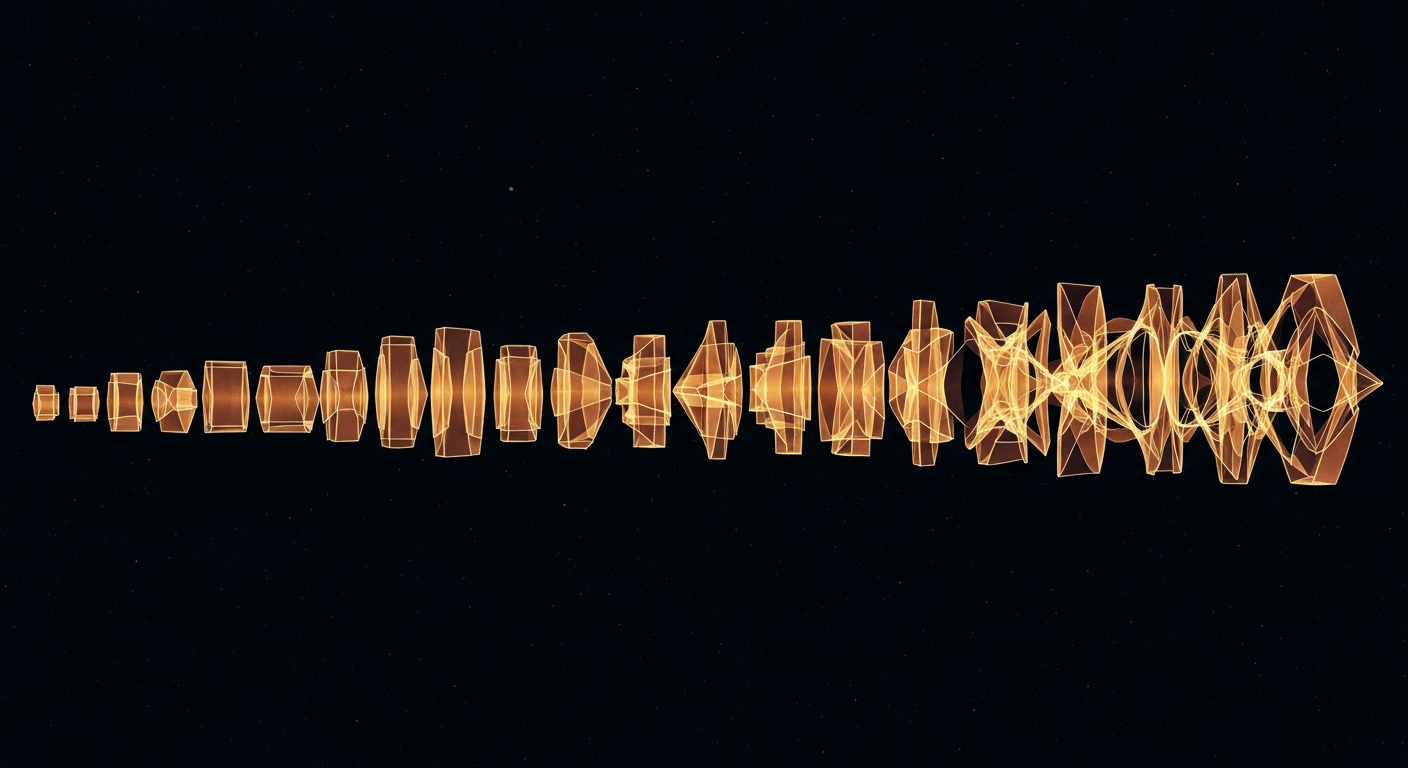
These terms are often used interchangeably, but they describe distinct approaches within computational design.
Parametric Design
In parametric design, the architect defines the rules and relationships. The algorithm generates geometry based on those rules, but the designer controls the logic. Changing a parameter (e.g., facade panel density) updates the geometry predictably because the designer wrote the relationship. Parametric design gives the architect precise control over the output.
Generative Design
In generative design, the architect defines the goals and constraints, and the algorithm discovers solutions autonomously. The designer specifies what the building should achieve (minimize energy, maximize views, stay within budget), and the algorithm explores the solution space using evolutionary computation or machine learning. The output may include solutions the designer would not have conceived.
How They Work Together
In practice, most advanced parametric architecture firms use both approaches. Generative design is used in early-stage exploration to discover promising design directions. Parametric design is then used to refine and develop the selected direction into a buildable project. The combination delivers both creative discovery and precise control.
"We use generative algorithms to explore the possible. Then we use parametric systems to make the best solution real. The two approaches are complementary, not competing," explains David Serrano.
Neuroarchitecture and Parametric Design: The Wellness Connection
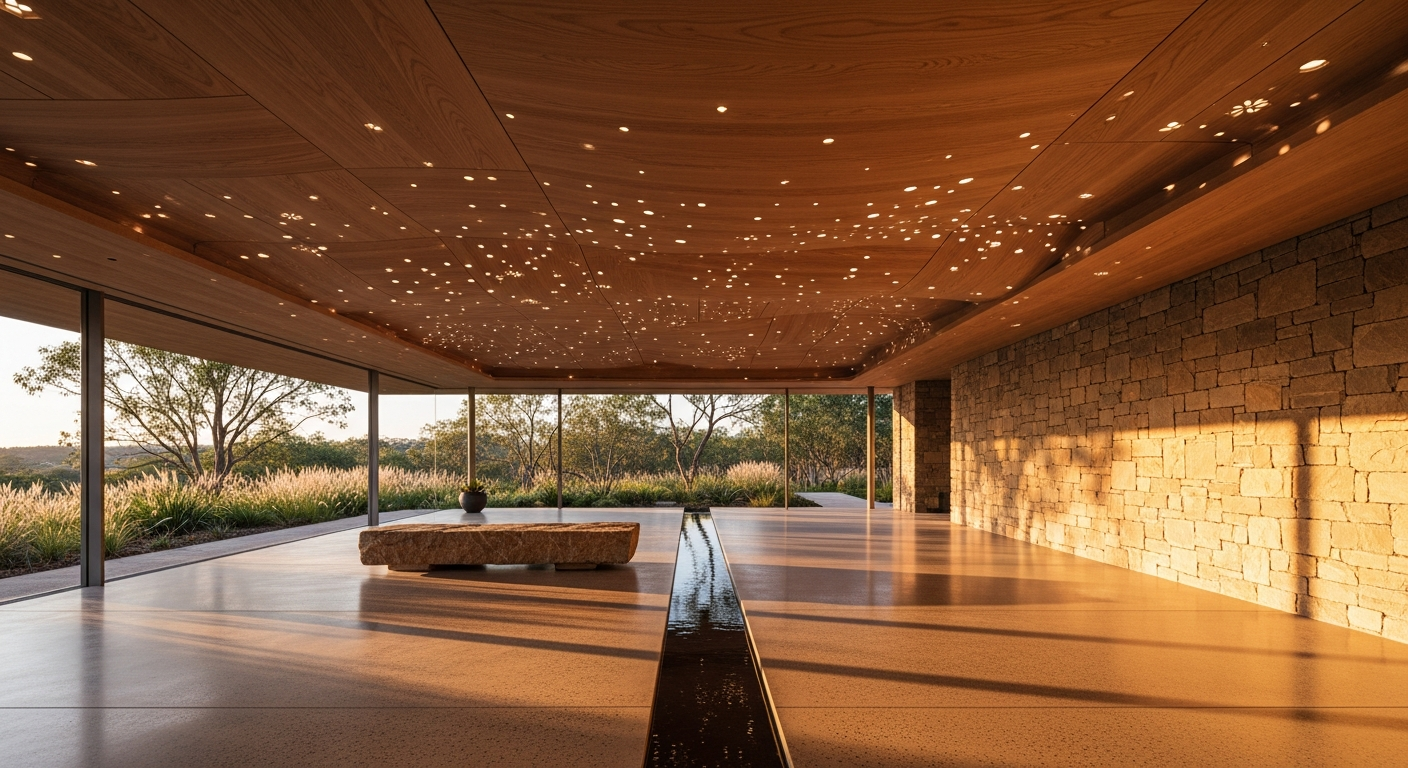
Neuroarchitecture is the application of neuroscience research to architectural design — understanding how spatial proportions, light quality, material textures, and acoustic conditions affect the brain and body. Parametric design is the most effective tool for implementing neuroarchitectural principles because it can simultaneously optimize the multiple environmental variables that affect human well-being.
Key Neuroarchitectural Parameters
- Circadian lighting: Parametric facades control daylight admission throughout the day, supporting the occupant's natural circadian rhythm. Proper circadian lighting has been shown to improve sleep quality by 20-30% and reduce daytime fatigue.
- Fractal complexity: Research by Nikos Salingaros and others shows that visual environments with fractal dimensions between D=1.3 and D=1.5 reduce cortisol (stress hormone) levels by up to 60% compared to flat, featureless surfaces. Parametric facades naturally produce this complexity.
- Biophilic geometry: Patterns derived from natural systems — branching, spiraling, tessellation — integrated as architectural geometry through parametric algorithms. Biophilic environments have been shown to reduce blood pressure and heart rate within minutes of exposure.
- Compression and expansion: The ratio of ceiling heights and spatial volumes along a circulation path affects dopamine release and the sense of discovery. Parametric design allows precise calibration of these spatial sequences.
The Wellness Premium
The Global Wellness Institute values the wellness real estate market at over $584 billion globally, growing at 18% annually. Buildings that integrate neuroarchitectural principles through parametric design capture the highest premiums in this market — 20-30% above comparable conventional developments.
"Neuroarchitecture gives us the science. Parametric design gives us the tool to implement it at the scale of a building. Together, they produce architecture that measurably improves how people feel — and that feeling translates directly into value," says David Serrano.
Parametric Architecture Applications in Real Estate Development
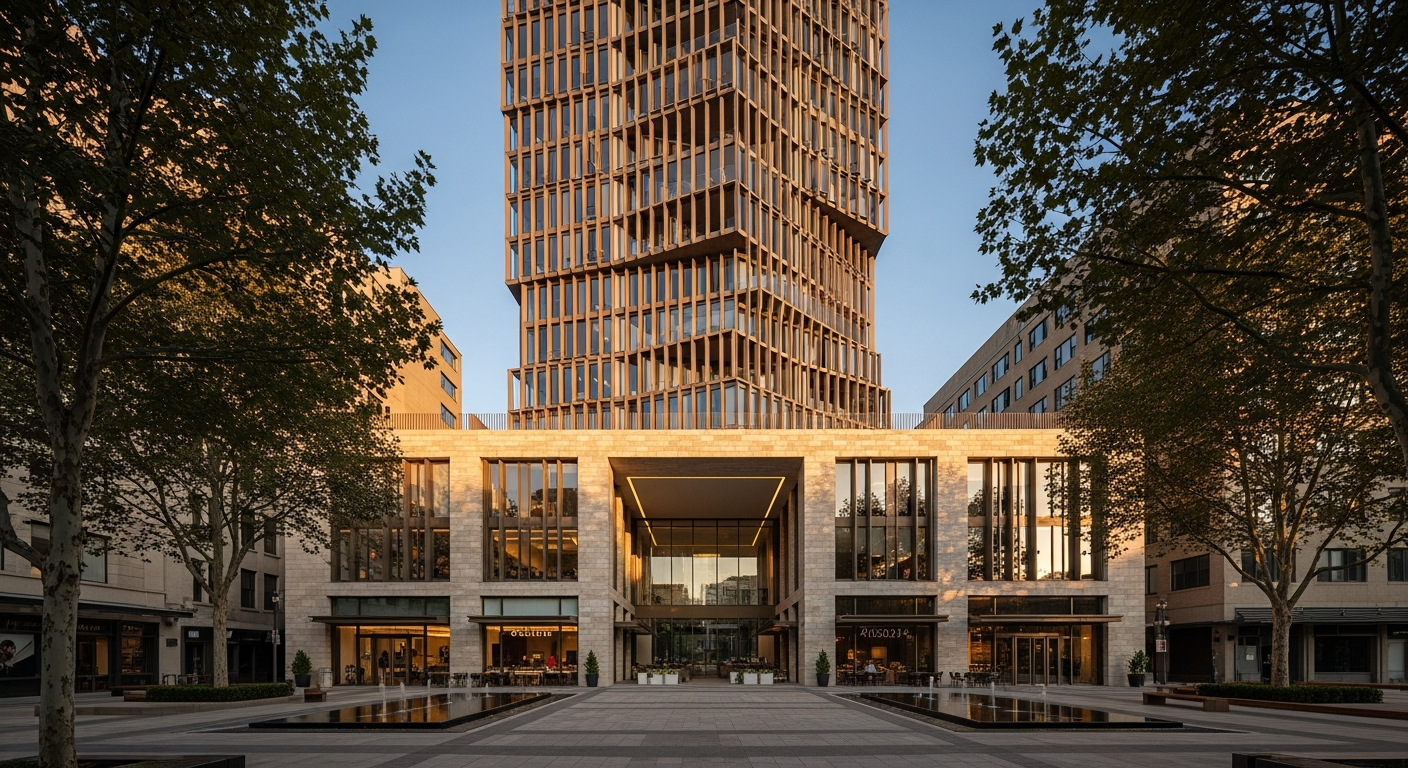
Parametric design applies to every building typology and every phase of real estate development. Here are the highest-impact applications for developers:
Parametric Facades
The most visible and highest-ROI application. Parametric facades create visual differentiation, reduce solar gain, improve daylighting, and generate the "landmark effect" that drives buyer interest. In competitive markets, the facade is the first impression — and often the purchase decision.
Bioclimatic Envelopes
The complete building skin — facade, roof, and ground floor — designed as a unified parametric system. Bioclimatic envelopes optimize thermal performance, natural ventilation, and daylighting simultaneously, reducing OPEX by 25-35% over the building's lifecycle.
Tower Massing and Form-Finding
Parametric algorithms optimize tower form for structural efficiency, wind load reduction, view maximization, and solar access. Studies show that parametric tower optimization can reduce structural material by 12-18% while improving unit view quality by 20-40%.
Interior Spatial Sequences
Parametric design calibrates ceiling heights, corridor proportions, and spatial transitions to create phenomenological experiences that enhance perceived quality. This is where neuroarchitecture meets parametric geometry — the interior experience that makes the buyer feel the value.
Amenity Design
Pools, spas, lobbies, rooftop gardens, and common areas designed parametrically to maximize sensory impact. These spaces become the project's signature moments — the images that appear in marketing, the experiences that drive word-of-mouth referrals.
Landscape and Urbanism
Parametric master planning optimizes plot layouts, circulation, green space distribution, and density gradients. At the urban scale, parametric design creates coherent developments where every building and landscape element responds to the same environmental and experiential logic.
How to Evaluate Parametric Architecture for Your Next Development
If you are a real estate developer considering parametric architecture, here is a practical framework for evaluation:
1. Assess Market Differentiation Need
Parametric design delivers the highest ROI in competitive premium markets where buyers have multiple options. If your project competes on price alone, parametric may not be the right investment. If it competes on quality, experience, and perceived value, parametric design is likely the most effective tool available.
2. Define Performance Goals
What specific performance improvements matter for your project? Facade differentiation? OPEX reduction? Wellness certification? Faster absorption? Clear goals help the parametric design team optimize for the right objectives.
3. Budget the Design Premium
Parametric design fees are typically 8-12% of construction cost, compared to 6-8% for conventional design. The additional 2-4% in design cost is an investment that typically returns 8-17% in sale price premium — a 2-4x return on the incremental design investment.
4. Select the Right Partner
Look for firms with demonstrated experience in parametric design for real estate (not just academic or competition work). The right partner understands both the computational design process and the developer's business model. Key questions to ask:
- Can you show built parametric projects with measured performance data?
- What is your digital-to-fabrication workflow?
- How do you integrate with local engineering and construction teams?
- What is the typical design timeline for a project of this scale?
5. Start with a Feasibility Study
Before committing to full parametric design, commission a parametric feasibility study. This typically includes solar and wind analysis, massing optimization, and facade concept options — enough to quantify the potential performance improvement and ROI for your specific project.
"The most successful parametric projects start with a clear conversation about business goals. When the developer and the design team align on what parametric design should achieve — not just what it should look like — the results are measurable and the investment pays for itself," says David Serrano.
Related: From Data to Geometry: Our Parametric Design Workflow → | Parametric Facade Design Guide → | Wellness Architecture ROI → | Biophilic Design in Real Estate →
FAQ
What is parametric architecture?
Parametric architecture is a computational design methodology where building geometry is generated through algorithmic rules and variable parameters rather than fixed forms. Architects define relationships between design variables — such as solar angle, wind load, structural stress, and view corridors — and algorithms generate optimized geometry that responds to all constraints simultaneously. The result is data-driven architecture where every form has a measurable purpose.
How does parametric facade design increase property value?
Parametric facades increase property value through two mechanisms. First, visual differentiation creates a "landmark effect" that drives buyer interest and willingness to pay, delivering sale price premiums of 8-17% above comparable market prices (ISE Facade Consulting). Second, parametric facades optimize environmental performance — solar shading, daylighting, natural ventilation — which reduces operating costs by 25-35% and supports wellness certifications that add an additional 20-30% premium.
What software is used for parametric architecture?
The industry standard is Rhinoceros 3D with Grasshopper (visual programming plugin), used by over 80% of parametric architecture firms. At Arquitectura Introspectiva, we use ARCHICAD with the Rhino-ARCHICAD Live Connection for seamless BIM integration — geometry flows bidirectionally between Grasshopper and ARCHICAD without export/import steps. Analysis plugins like Ladybug (solar), Karamba3D (structural), and Kangaroo (physics simulation) integrate environmental performance directly into the parametric design workflow.
How much does parametric design cost compared to traditional architecture?
Parametric design fees typically range from 8-12% of construction cost, compared to 6-8% for conventional architecture. The 2-4% additional design investment typically returns 8-17% in sale price premium — a 2-4x return on the incremental design cost. Facade construction costs may increase 10-25% due to geometric complexity, but this is offset by the sale price premium, OPEX reduction (25-35%), and faster absorption (23% shorter selling time).
What is the ROI of parametric facades for developers?
The five-year net ROI of parametric design over the design cost differential is estimated at 40-85%, based on combined sale price premiums (8-17%), OPEX reduction (25-35%), wellness premiums (20-30% for integrated bioclimatic design), and faster absorption (23% reduction in selling time). The exact ROI depends on market conditions, project scale, and the degree of parametric optimization applied.
Is parametric architecture sustainable?
Yes. Parametric architecture is inherently sustainability-oriented because it optimizes building geometry based on environmental data. Parametric envelopes reduce HVAC energy consumption by 25-35%, improve daylighting uniformity by 40-60%, and reduce structural material by 15-20% through topology optimization. Parametric design also reduces construction waste by 15-20% through precise digital fabrication. These performance improvements contribute to green building certifications including LEED, WELL, BREEAM, and Estidama.
What is the difference between parametric and generative design?
In parametric design, the architect defines the rules and relationships — changing a parameter updates geometry predictably. In generative design, the architect defines goals and constraints, and algorithms discover solutions autonomously using evolutionary computation or machine learning. Most advanced firms use both: generative design for early-stage exploration to discover promising directions, and parametric design to refine the selected solution into a buildable project.
How does neuroarchitecture relate to parametric design?
Neuroarchitecture applies neuroscience research to architectural design, understanding how space affects the brain and body. Parametric design is the most effective tool for implementing neuroarchitectural principles because it simultaneously optimizes multiple environmental variables: circadian lighting (improving sleep quality 20-30%), fractal visual complexity (reducing cortisol up to 60%), biophilic geometry (lowering blood pressure), and spatial compression/expansion sequences (modulating dopamine). Together, they produce architecture that measurably improves occupant well-being — which translates into 20-30% wellness premiums.
What types of buildings benefit most from parametric design?
Premium residential towers see the highest ROI due to facade differentiation and wellness premiums. Commercial offices benefit from energy optimization and ESG certification support. Hotels and resorts use parametric design for signature architectural experiences that drive brand value. The approach is most impactful in competitive premium markets (Dubai, Abu Dhabi, Mexico City, Miami) where buyers have multiple options and differentiation drives purchase decisions.
How long does a parametric design project take?
Parametric design timelines for schematic through design development typically run 3-5 months, compared to 4-6 months for conventional design. While individual design iterations are faster (algorithms generate variations in minutes rather than days), the process includes additional analysis and optimization phases. The net result is often a shorter overall timeline with a significantly better-optimized design. A parametric feasibility study can be completed in 2-4 weeks.