Parametric Facade Design: How It Works and Why It Matters
2026-03-21 · 12 min read · David Serrano
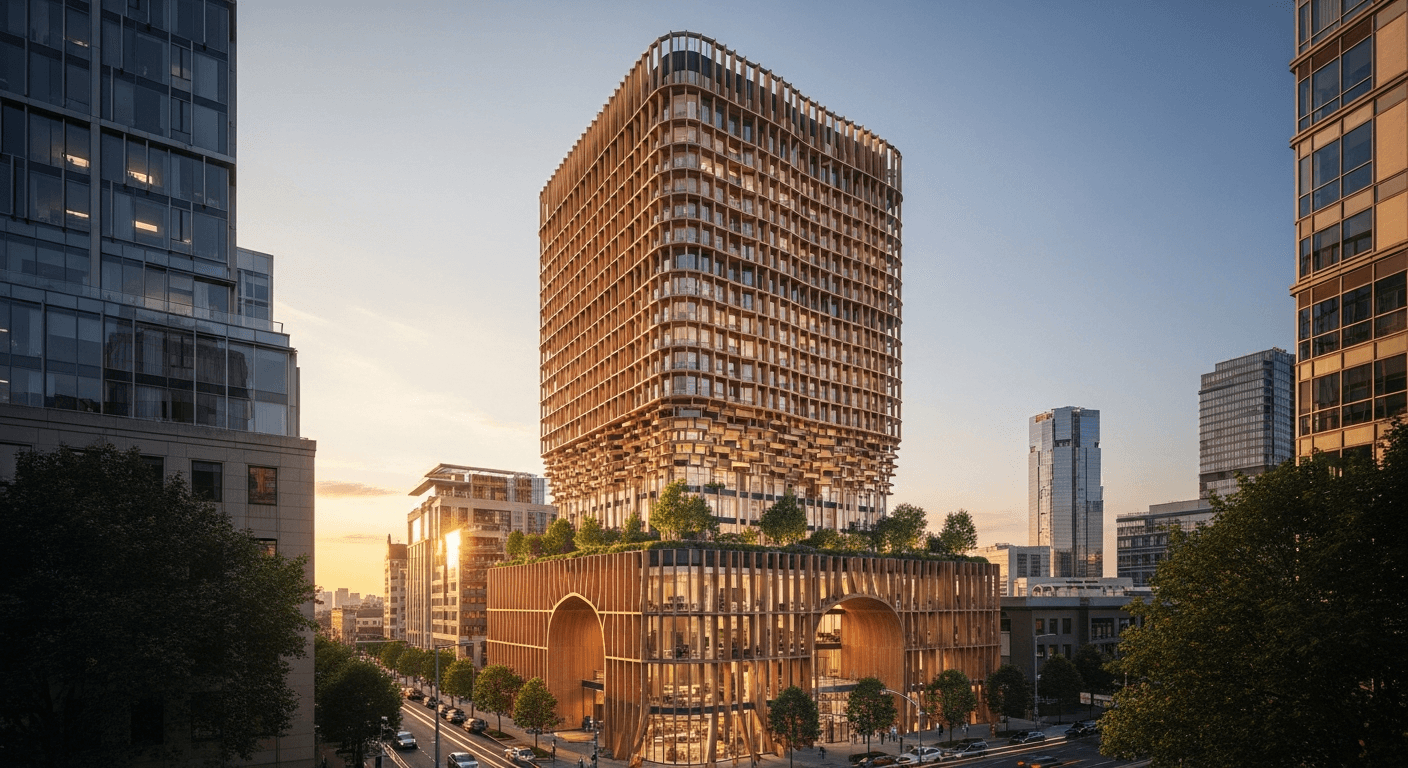
What Is Parametric Facade Design?
Parametric facade design is the process of generating building envelope geometry through algorithmic rules driven by environmental, structural, and aesthetic parameters. Rather than designing a facade as a static composition of fixed panels, parametric facade design treats every element — panel angle, aperture size, material density, perforation pattern — as a variable controlled by measurable data. Solar radiation at each point on the facade, wind load distribution, interior daylighting targets, view corridors, and structural capacity all become inputs to an algorithm that generates the optimal geometry for each location on the building skin.
The result is a facade where no two panels need be identical, yet every variation has a quantifiable reason. This data-driven approach produces envelopes that simultaneously outperform conventional curtain walls in energy efficiency, daylighting quality, and visual impact — the three factors that matter most to real estate developers evaluating facade investment.
Parametric facade design is not decorative complexity. It is engineered variation. The visual richness that characterizes parametric facades is a byproduct of performance optimization, not an end in itself.
How Parametric Facades Are Designed: The Process
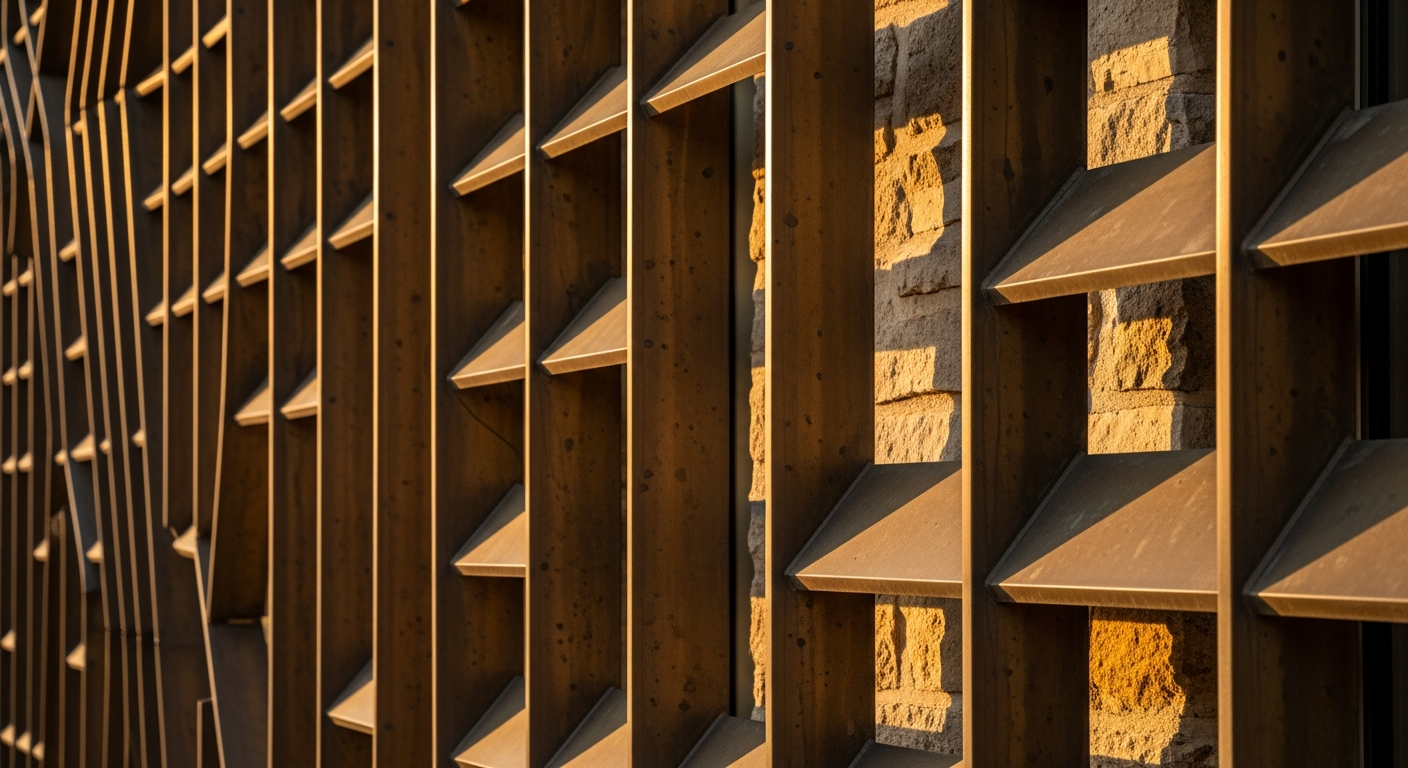
Parametric facade design follows a structured computational workflow that transforms site data into fabrication-ready geometry. Understanding this process helps developers evaluate proposals and timelines accurately.
1. Environmental Data Collection
The process begins with site-specific environmental analysis. Using tools like Ladybug and Honeybee within Grasshopper (the visual programming environment for Rhinoceros 3D), the design team maps solar radiation intensity (kWh/m²) across every point on the building envelope, identifies prevailing wind directions and velocities, and calculates thermal gain by orientation and season. In hot climates — GCC markets, coastal Mexico, Southeast Asia — the west and southwest facades typically receive 40-60% more thermal radiation than north-facing surfaces. This asymmetry is the primary driver of parametric variation.
2. Parameter Definition and Algorithm Development
The design team translates environmental data into algorithmic rules. For example: "Panel angle at point P = function of annual cumulative solar radiation at P, desired interior illuminance level, and maximum allowable thermal gain." These rules are encoded in Grasshopper as visual programming definitions — networks of connected components that generate geometry from data. The algorithm defines the logic; changing any input parameter regenerates the entire facade.
3. Generative Exploration and Optimization
Evolutionary solvers (Galapagos, Wallacei) within Grasshopper evaluate hundreds to thousands of facade variations against multiple objectives: minimize cooling load, maximize daylight autonomy, minimize material weight, stay within budget. Multi-objective optimization identifies Pareto-optimal solutions — the best possible trade-offs. The design team and developer select from this optimized set.
4. Rationalization and Fabrication Data
The selected design is rationalized for manufacturing. Panelization algorithms convert complex parametric surfaces into discrete, fabricable components. Ruled surface techniques — generating curved appearances from straight elements — dramatically reduce fabrication cost. CNC cutting paths, panel schedules, connection details, and material quantities are generated directly from the parametric model, reducing errors and waste by 15-20% compared to conventional detailing.
5. BIM Integration and Documentation
Through the Rhino-ARCHICAD Live Connection, parametric facade geometry flows into BIM as native curtain wall elements with full property data, enabling coordinated construction documentation. The parametric model and the construction documents are the same data — no translation gap between what was designed and what gets built.
Materials and Systems for Parametric Facades
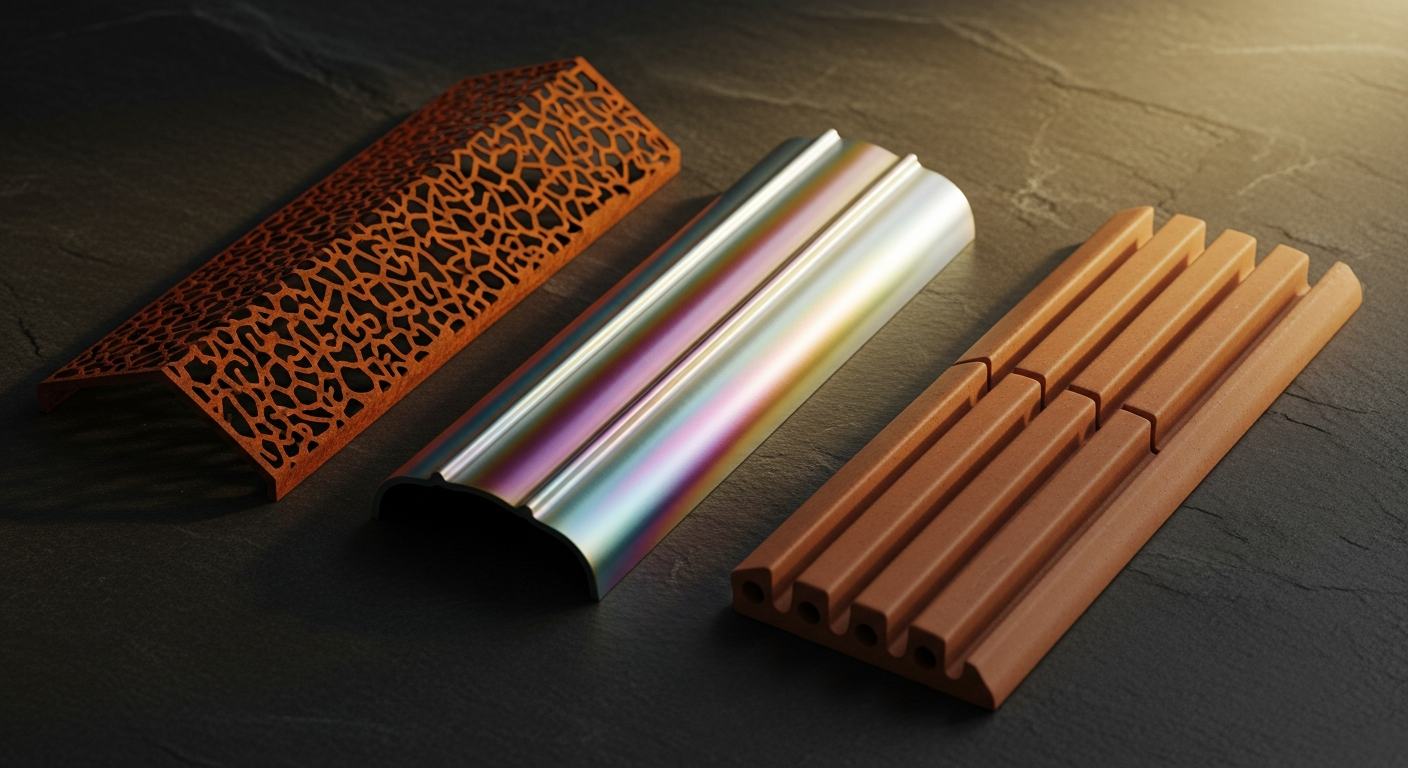
Parametric facade design is material-agnostic — the algorithmic approach works with any cladding system. However, certain materials and systems are better suited to the geometric variation that parametric design produces.
Aluminum Composite Panels (ACM/ACP)
The most common material for parametric facades globally. Lightweight, durable, available in any color, and easily CNC-cut to parametric geometries. Panels can be flat (with varied angles at the subframe) or perforated with algorithmically generated patterns. Cost: $80-180 USD/m² installed, depending on finish and complexity.
Glass Fiber Reinforced Concrete (GFRC)
For facades requiring mass and texture. GFRC panels can be cast in complex three-dimensional geometries using CNC-milled molds. Weight is 80% less than precast concrete with comparable structural performance. Cost: $150-350 USD/m² installed. Best suited for premium residential and hospitality projects where tactile materiality justifies the premium.
Unitized Curtain Wall with Parametric Shading
Standard unitized glass curtain wall systems with parametric external shading devices — louvers, fins, or perforated screens — mounted on the facade. This hybrid approach delivers parametric visual impact and solar performance while using proven, code-compliant curtain wall technology. Cost: $250-500 USD/m² for the complete system.
Timber and Engineered Wood
For projects prioritizing biophilic materiality and carbon reduction. Parametric timber facades use ruled surface geometry — every member is straight, fabricated from standard sections — to create complex visual effects. CNC joinery and robotic fabrication enable precise assembly. Cost: $120-280 USD/m² installed, varying significantly by species and treatment.
Perforated Metal Screens
Perforated steel, aluminum, or copper screens with algorithmically varied hole patterns. Perforation density is parametrically mapped to solar radiation: denser perforation on high-gain orientations, larger openings where daylight or views are prioritized. Cost: $90-200 USD/m² installed.
Cost and ROI of Parametric Facades
The financial case for parametric facade design is supported by consistent data across markets. Here is the framework developers need to evaluate the investment.
Cost Premium
Parametric facades cost 10-25% more than conventional curtain walls of equivalent area. This premium covers three components: additional design complexity (algorithmic development, environmental analysis, optimization), fabrication tooling (CNC programming, custom connection details), and installation precision (panels with varied geometry require more careful sequencing). For a 5,000 m² facade, the typical parametric premium is $200,000-500,000 USD over a conventional system.
Sale Price Premium: 8-17%
Research by ISE Facade Consulting and corroborated by transaction data from premium markets (Dubai, Miami, Mexico City, Singapore) shows that developments with distinctive parametric facades command 8-17% higher sale prices per square meter compared to conventionally designed buildings in the same submarket. This "landmark effect" is the largest single financial benefit of parametric facade investment.
Operating Cost Reduction: 25-45%
Parametric solar shading reduces cooling loads by 25-45% depending on climate and facade orientation. In GCC markets where cooling represents 60-70% of building energy cost, the OPEX savings over a 10-year hold period can exceed the entire facade premium. In temperate climates like Mexico City, the reduction is 25-35% — still significant for operating budget projections.
Absorption Velocity: 23% Faster
Distinctive facades create visual identity that drives buyer interest and media coverage. ISE data indicates 23% faster absorption for parametric-facade developments, reducing carrying costs and accelerating return on equity.
Net ROI Framework
For a typical premium residential tower (200 units, $4,000/m² average price, 5,000 m² facade):
- Parametric facade premium: $300,000-500,000
- Sale price uplift (10% on $80M GDV): $8,000,000
- OPEX reduction (30% on $500K/year cooling, 10-year NPV): $1,200,000
- Carrying cost reduction (23% faster absorption): $400,000-800,000
- Net return on facade premium: 15-20x the incremental investment
"The facade is the single highest-ROI design decision a developer makes. It is what the buyer sees first, what the market photographs, and what drives the price per square meter above baseline. Parametric design ensures that every dollar spent on the facade is optimized for both performance and perception," says David Serrano, Founder of Arquitectura Introspectiva.
Parametric Facades and Sustainability
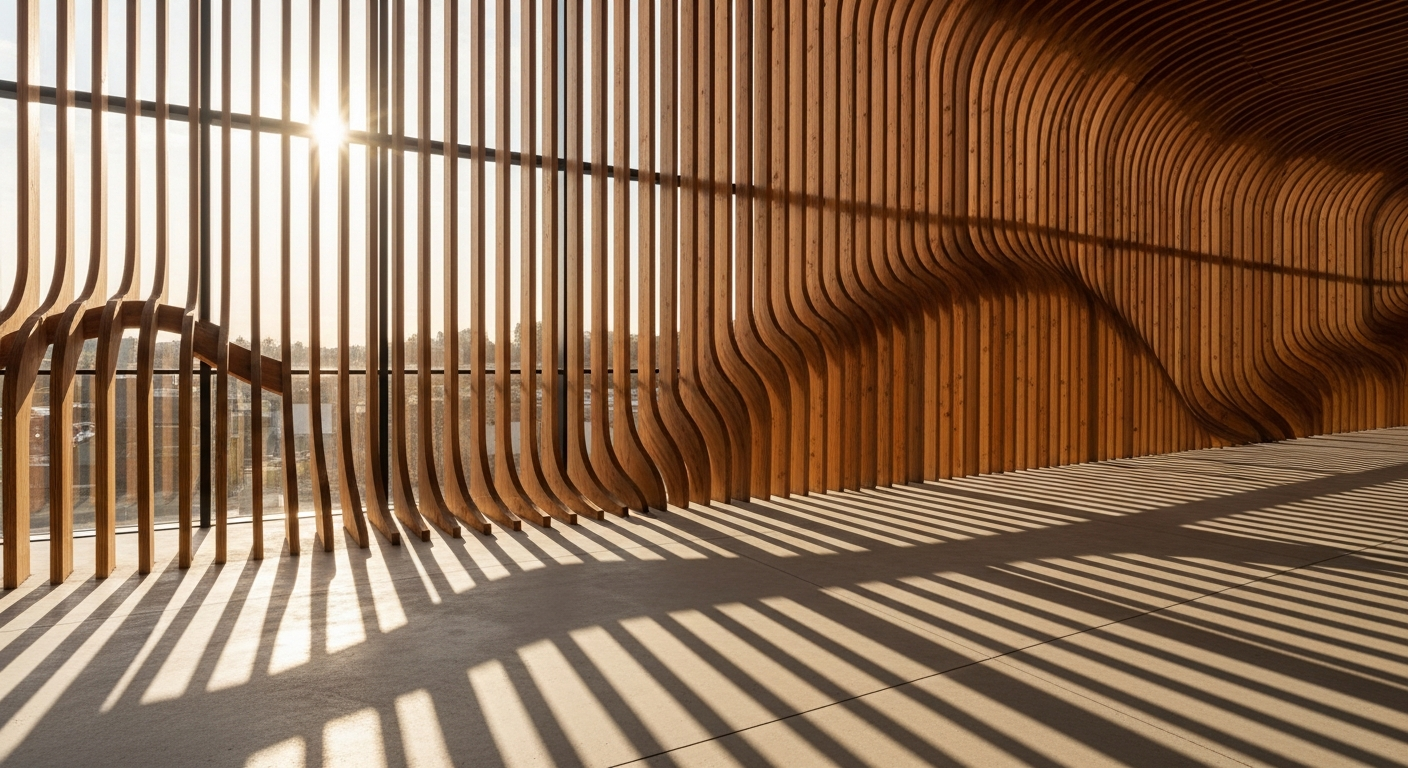
Parametric facade design is one of the most effective strategies for reducing operational carbon in buildings — because it addresses the building's largest energy interface: the envelope.
Solar Shading Performance
Algorithmically optimized solar shading is the primary sustainability benefit of parametric facades. By varying panel angle and density based on orientation-specific solar radiation data, parametric facades reduce solar heat gain coefficient (SHGC) by 40-60% on high-exposure facades while maintaining daylight admission on lower-exposure orientations. The result is buildings that need less mechanical cooling and less artificial lighting simultaneously — a dual reduction that conventional fixed-louver systems cannot achieve.
Daylighting Optimization
Parametric aperture control improves spatial daylight autonomy (sDA) — the percentage of occupied hours when daylight alone provides adequate illumination — by 40-60% compared to conventional curtain walls. Higher sDA means lower artificial lighting energy and better occupant satisfaction. LEED v4.1 awards up to 3 points for sDA performance, and parametric facades consistently achieve the highest tier.
Material Efficiency
Parametric panelization algorithms optimize material usage. CNC cutting patterns generated from parametric models achieve 92-96% material utilization rates, compared to 80-85% for conventional facade fabrication. Over a large facade, this reduces material waste — and embodied carbon — by 15-20%.
OPEX Reduction Over Lifecycle
The combined effect of solar shading, daylighting optimization, and natural ventilation integration (where facade porosity is parametrically tuned to prevailing wind conditions) reduces annual HVAC and lighting energy by 25-35%. Over a 30-year building lifecycle, this translates to significant reductions in both operating cost and operational carbon emissions — increasingly important for ESG reporting and green bond eligibility.
Certification Contributions
Parametric facades contribute measurable credits across LEED (Energy & Atmosphere, Indoor Environmental Quality), WELL (Light, Thermal Comfort), BREEAM (Energy, Health & Wellbeing), and Estidama (Resourceful Energy, Livable Buildings). The quantified performance data generated during parametric design — radiation maps, sDA calculations, thermal simulations — serves directly as certification documentation.
Getting Started with Parametric Facade Design
For developers evaluating parametric facade design for the first time, here is a practical roadmap.
1. Identify the Performance Gap
Where does your current facade approach fall short? If you are competing in a premium market where every development has a glass curtain wall, the gap is differentiation. If you are in a hot climate with high cooling costs, the gap is thermal performance. If you are pursuing WELL or LEED Platinum certification, the gap is quantified daylighting and thermal comfort. Parametric facade design is most valuable when there is a clear performance objective it can address.
2. Commission a Facade Feasibility Study
Before committing to full parametric facade development, invest in a 2-4 week feasibility study. This typically includes site-specific solar analysis, preliminary facade concepts (2-3 options), material and cost estimates, and projected performance metrics. The cost is typically $15,000-40,000 — a fraction of the facade budget — and provides the data needed to make an informed go/no-go decision.
3. Select a Firm with Built Work
Parametric facade design requires specialized expertise: algorithmic design in Grasshopper, environmental analysis with Ladybug/Honeybee, structural coordination, fabrication knowledge, and BIM documentation. Ask to see built projects — not competition renders. The gap between parametric concept images and built parametric facades is where most projects fail. The right partner has closed that gap repeatedly.
4. Integrate Early
Parametric facade design delivers maximum value when integrated from schematic design — not added as decoration in design development. The facade algorithm should be driven by the same environmental data that informs massing, orientation, and floor plate layout. Late integration produces facades that look parametric but perform conventionally.
5. Budget for the Premium, Plan for the Return
The 10-25% facade cost premium is an investment, not a cost. Model it against the projected sale price uplift (8-17%), OPEX reduction (25-45%), and absorption acceleration (23%) for your specific market. In virtually every premium market we have analyzed, the return on parametric facade investment exceeds the cost by a factor of 10-20x over a 5-year hold period.
"The developers who get the most from parametric facades are the ones who treat the facade as a performance system, not a decorative layer. When the brief says 'reduce cooling by 35% and sell 15% above market,' the algorithm has clear targets — and the results are measurable," says David Serrano.
Related: What Is Parametric Architecture? The Definitive Guide → | How Parametric Facades Reduce Cooling Costs by 45% → | High-Performance Building Design →
FAQ
What is parametric facade design?
Parametric facade design is the process of generating building envelope geometry through algorithmic rules driven by environmental, structural, and aesthetic parameters. Every element — panel angle, aperture size, perforation pattern — is controlled by measurable data such as solar radiation, wind load, and daylighting targets. The result is a facade where every variation has a quantifiable reason, delivering simultaneous improvements in energy performance, daylighting quality, and visual impact.
How much does a parametric facade cost?
Parametric facades typically cost 10-25% more than conventional curtain walls of equivalent area. For a 5,000 m² facade, the premium is approximately $200,000-500,000 USD. This covers additional design complexity, CNC fabrication tooling, and installation precision. The premium is offset by 8-17% higher sale prices (ISE Facade Consulting data), 25-45% reduction in cooling costs, and 23% faster absorption — delivering a net return of 10-20x the incremental facade investment over a 5-year period.
What materials are used for parametric facades?
Parametric facades work with any cladding material. The most common are aluminum composite panels ($80-180/m²), glass fiber reinforced concrete or GFRC ($150-350/m²), unitized curtain wall with parametric shading ($250-500/m²), engineered timber ($120-280/m²), and perforated metal screens ($90-200/m²). Material selection depends on project budget, climate, desired aesthetic, and sustainability goals. Ruled surface techniques — generating curved appearances from straight elements — reduce fabrication cost across all materials.
How do parametric facades reduce energy costs?
Parametric facades reduce energy costs through three mechanisms. First, algorithmically optimized solar shading reduces solar heat gain by 40-60% on high-exposure facades, cutting cooling loads by 25-45%. Second, parametric aperture control improves spatial daylight autonomy by 40-60%, reducing artificial lighting demand. Third, parametric porosity tuned to prevailing wind conditions enables natural ventilation. The combined effect reduces annual HVAC and lighting energy by 25-35% — significant for both operating budgets and ESG reporting.
How long does parametric facade design take?
A parametric facade feasibility study takes 2-4 weeks and includes solar analysis, preliminary concepts, and cost estimates. Full parametric facade design — from environmental analysis through fabrication documentation — takes 8-16 weeks depending on facade area and complexity. The parametric approach often compresses the overall facade design timeline because algorithmic iteration is faster than manual redesign, and fabrication data is generated directly from the parametric model without manual detailing.