Parametric Facades: How They Reduce Cooling Costs by 45%
2026-04-01 · 13 min · David Serrano
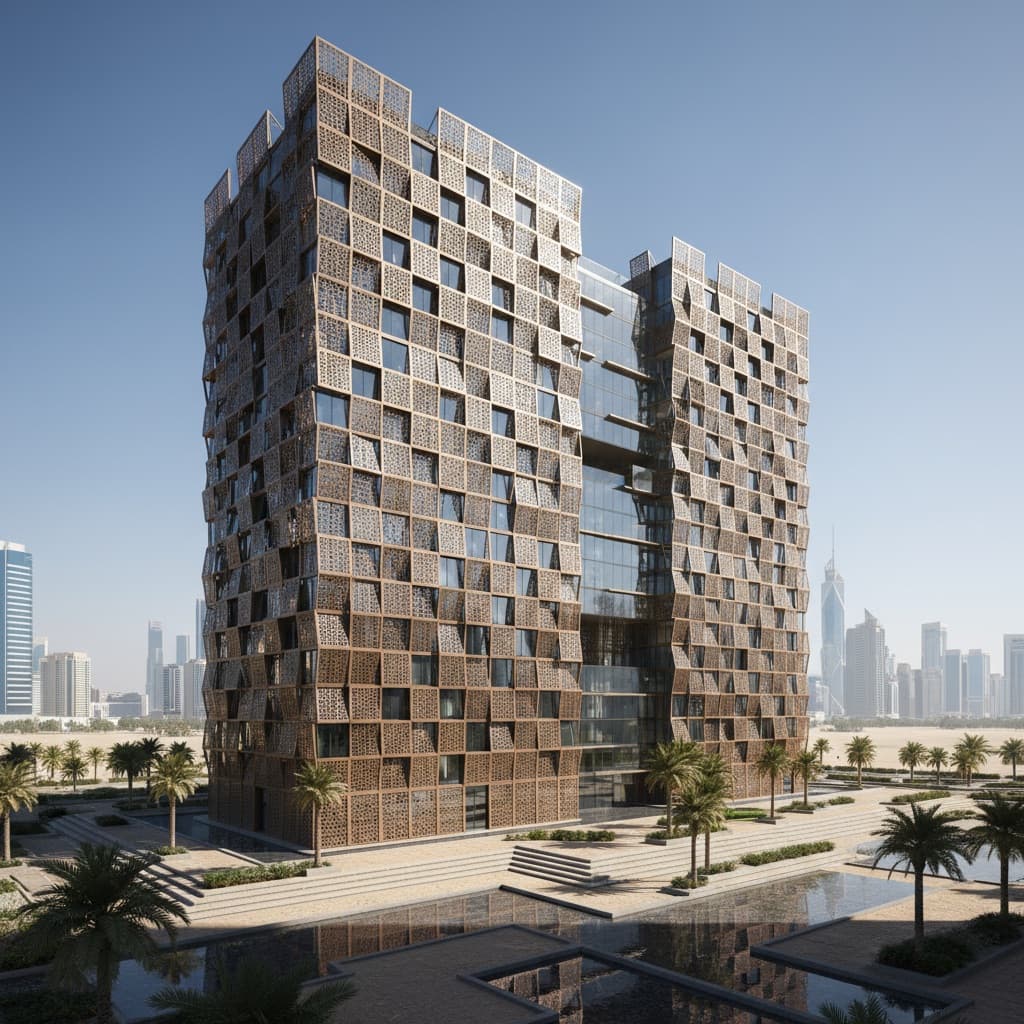
The Cooling Problem: Why Conventional Facades Fail in Extreme Climates
In Gulf Cooperation Council (GCC) countries — UAE, Saudi Arabia, Qatar, Oman — cooling accounts for 60-70% of total building energy consumption. In tropical markets like Miami and coastal Mexico, the figure is 40-55%. Conventional glass curtain walls, designed for temperate climates, become thermal liabilities in these environments: they transmit massive solar heat gain, force oversized HVAC systems, inflate operating costs, and create uncomfortable interior glare conditions that reduce occupant satisfaction.
The conventional response — thicker insulated glass, reflective coatings, interior blinds — treats symptoms rather than causes. These solutions reduce transparency, eliminate views (a primary value driver in premium real estate), and still require enormous cooling capacity. The energy bills remain high, the carbon footprint remains large, and the building's facade becomes a generic glass box indistinguishable from its neighbors.
Parametric facades solve this problem at its root. Instead of blocking all solar radiation uniformly, algorithmic geometry creates differentiated shading — each panel, perforation, or fin angle is calibrated to the specific solar exposure at its exact position on the building. South-facing panels close more; north-facing panels open for views. West-facing elements respond to the brutal afternoon sun; east-facing elements allow morning light. The result: cooling load reduction of up to 45% without sacrificing daylight, views, or architectural identity.
How Parametric Facades Reduce Cooling: The Science
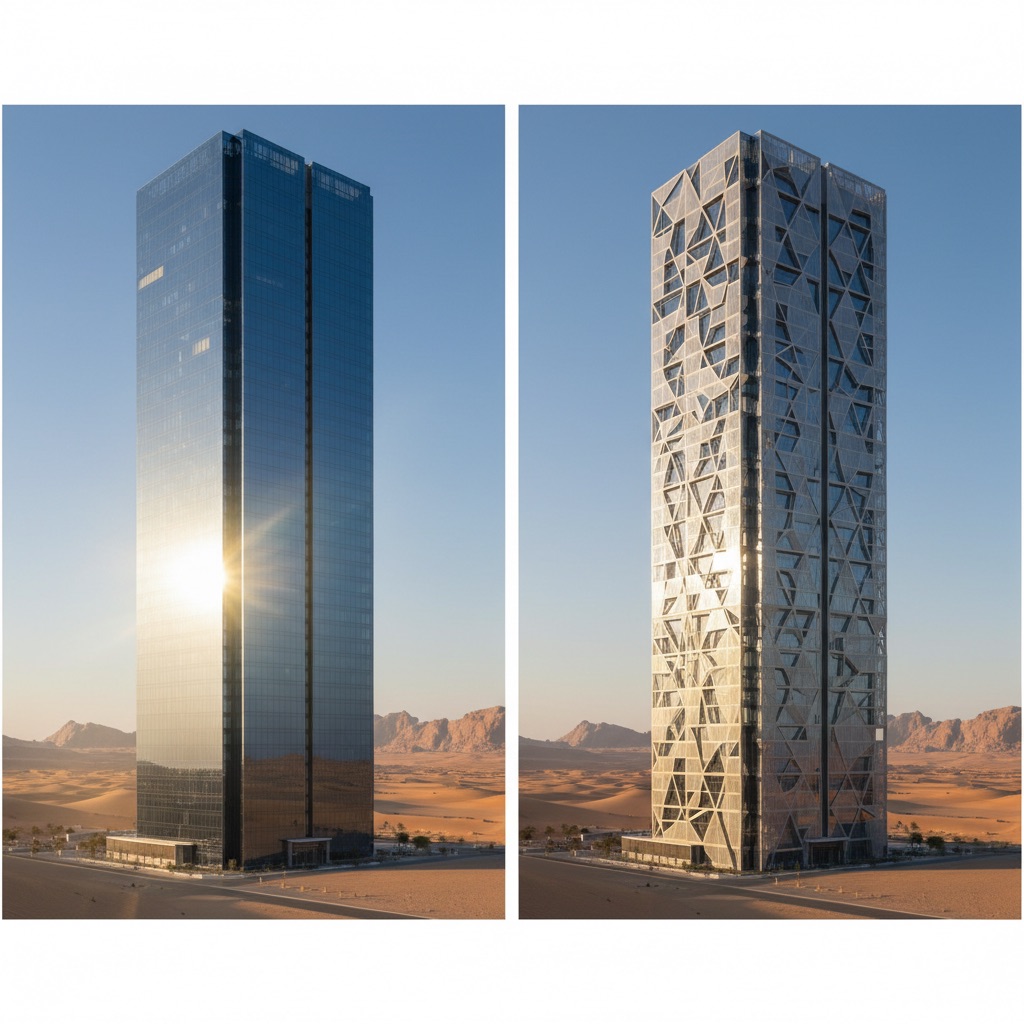
Solar Incidence Mapping
The process begins with a precise solar analysis of the building's geometry. Using tools like Ladybug and Honeybee (Grasshopper plugins for Rhino), the design team maps annual solar radiation on every square meter of the facade — hour by hour, month by month. The result is a high-resolution "heat map" showing where the facade receives the most solar energy and when.
Algorithmic Panel Calibration
Each facade panel's angle, perforation density, or fin depth is then defined as a function of the solar radiation at its specific position. The algorithm might define: panel_angle = f(solar_radiation, view_value, structural_load). Panels in high-radiation zones close more; panels in low-radiation zones open for views and daylight. This per-panel optimization is impossible to achieve manually — a 25-story tower might have 3,000-5,000 individually calibrated panels.
Shading Coefficient Optimization
The key metric is the Solar Heat Gain Coefficient (SHGC). A conventional curtain wall has an SHGC of 0.25-0.40, meaning 25-40% of solar energy passes through. A parametric shading system can achieve an effective SHGC of 0.08-0.15 on critical facades — blocking 85-92% of solar heat gain while maintaining visual transparency through carefully calculated apertures.
Airflow Integration
Advanced parametric facades integrate natural ventilation into the shading system. Algorithmically placed openings create stack effect and cross-ventilation pathways that supplement mechanical cooling during transitional seasons. In GCC markets, this can provide 2-4 months of reduced HVAC operation annually (October-March), further reducing energy consumption.
The Numbers
| Metric | Conventional Curtain Wall | Parametric Shading Facade |
|---|---|---|
| SHGC (west facade) | 0.25-0.40 | 0.08-0.15 |
| Cooling Load | Baseline | -35% to -45% |
| Annual HVAC Energy | Baseline | -25% to -35% |
| Interior Daylight | Uncontrolled (glare) | Optimized (300-500 lux) |
| Occupant Comfort | Perimeter zones overheated | Uniform thermal comfort |
| HVAC System Size | Baseline | -20% to -30% (smaller units) |
From Mashrabiya to Algorithm: The Cultural Evolution
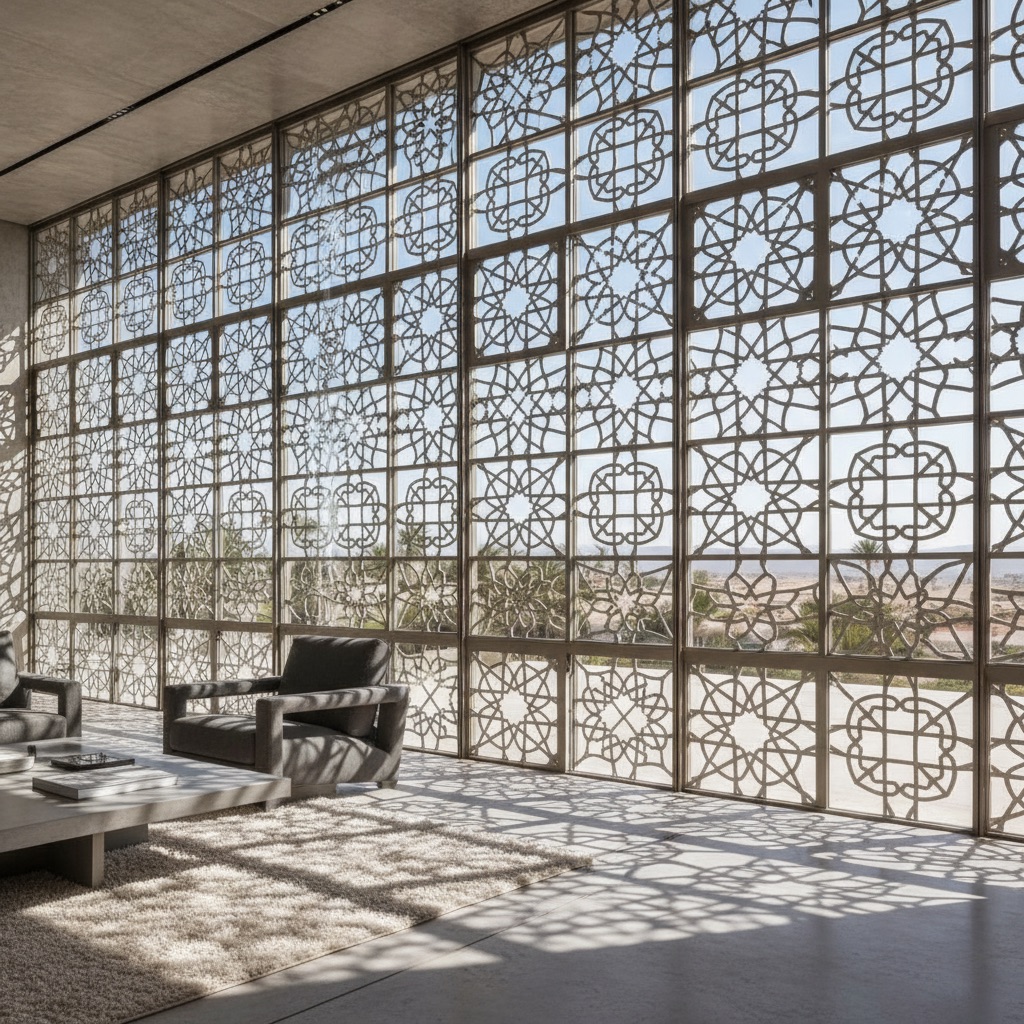
The mashrabiya — the carved wooden lattice screen found throughout Islamic architecture from Cairo to Seville — is one of the most sophisticated passive cooling technologies ever developed. For over a millennium, the mashrabiya solved the same problem parametric facades address today: filtering intense solar radiation while maintaining airflow, views, and privacy.
Traditional mashrabiya screens work through three mechanisms:
- Solar filtration: The carved wooden lattice blocks direct solar radiation while allowing diffused light and air to pass through.
- Evaporative cooling: Placed near water vessels (the word "mashrabiya" derives from "drink"), the lattice facilitated evaporative cooling of incoming air.
- Privacy gradient: The density of the carving varied — denser at eye level for privacy, more open above for light and air.
Contemporary parametric facades extend these principles with computational precision. Where a traditional craftsman carved patterns by intuition and tradition, algorithmic design calibrates every opening to measured solar data. The geometric patterns can reference Islamic geometric traditions — stars, hexagons, interlocking polygons — while the density, scale, and orientation of each element responds to its specific position on the building envelope.
For developers in GCC markets, this cultural connection is a powerful differentiator. A parametric mashrabiya facade communicates respect for architectural heritage while demonstrating technical sophistication. It is not pastiche — it is evolution. And it resonates with buyers and authorities who value cultural continuity alongside innovation.
Saudi Vision 2030 and UAE cultural guidelines explicitly encourage this kind of contemporary reinterpretation. Developments that achieve it successfully command premiums not just for performance, but for cultural relevance.
The Developer ROI: Facade Investment vs. Lifetime Savings
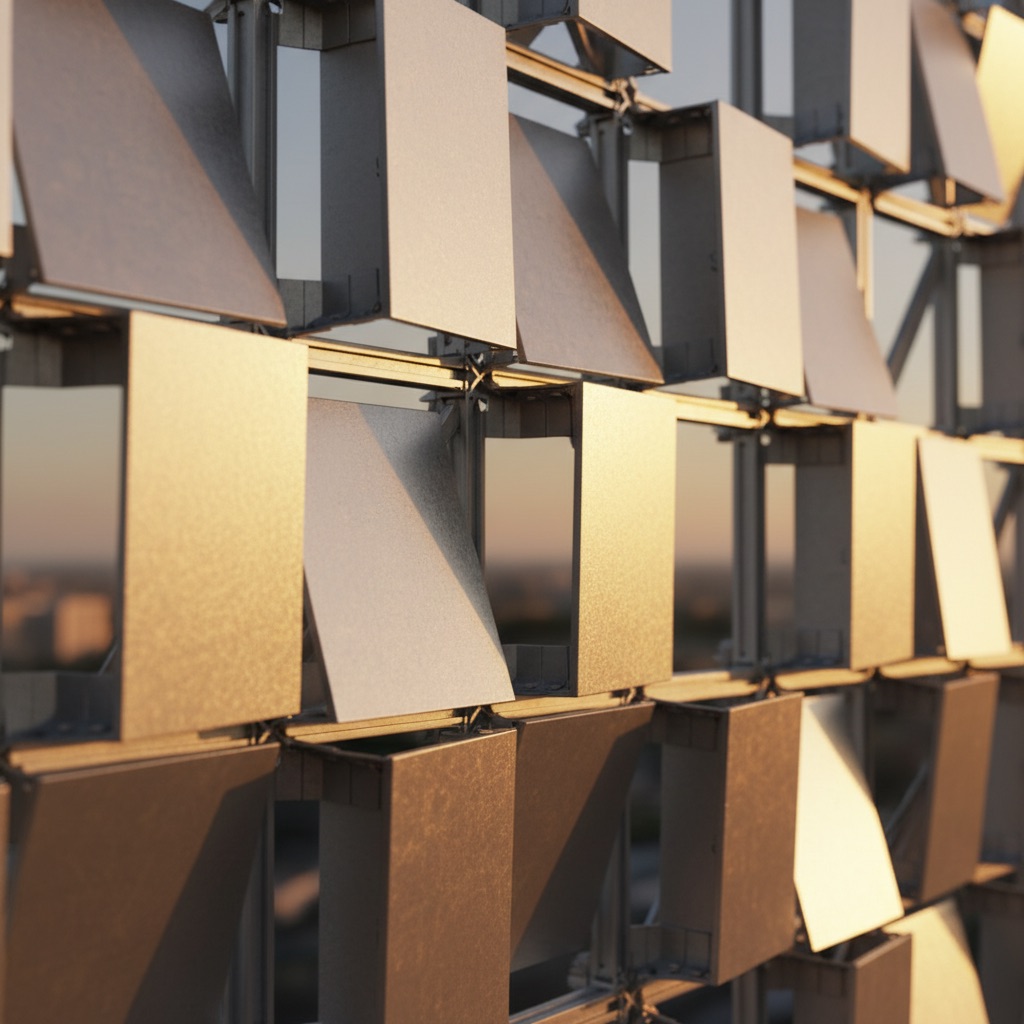
Parametric facades cost more than conventional curtain walls — typically 10-25% more for the facade system. But the lifecycle economics consistently favor the parametric approach, especially in cooling-dominated climates.
Capital Cost Analysis
For a 25-story residential tower with 8,000 m² of facade area:
- Conventional curtain wall: $800-1,200/m² = $6.4M-9.6M
- Parametric shading facade: $1,000-1,500/m² = $8.0M-12.0M
- Incremental cost: $1.6M-2.4M (20-25% premium)
Annual Operating Savings
- HVAC energy reduction: 35-45% = $180K-320K/year in GCC markets
- HVAC equipment downsizing: 20-30% smaller systems = $200K-400K capital savings
- Maintenance reduction: Less HVAC cycling = $30K-60K/year
Revenue Impact
- Sale price premium: 8-17% above conventional = $2.4M-8.5M additional revenue (on $50M sellable inventory)
- Faster absorption: 23% shorter selling period = reduced carrying costs of $300K-600K
Payback and ROI
The incremental facade cost ($1.6M-2.4M) is recovered through the combination of sale price premium, HVAC downsizing savings, and first-year operating savings — often before the building is fully sold. The 10-year net present value of a parametric facade investment in a GCC tower project ranges from $4M-12M above the incremental cost — a 3-5x return on the facade premium.
For rental/commercial assets, the OPEX reduction improves NOI, which at typical cap rates of 6-8% in Gulf markets translates to an asset value increase of $2.5M-5.5M from energy savings alone — again, multiples above the facade investment.
Implementation: From Data to Fabrication
Implementing a parametric facade is a structured process that integrates with standard development workflows. The key stages:
1. Performance Brief (Week 1-2)
Define facade performance targets: maximum SHGC per orientation, minimum daylight factor, view preservation requirements, budget range, cultural/aesthetic references. This brief aligns the developer's commercial objectives with the engineering targets.
2. Computational Design (Week 3-8)
The parametric design team develops the algorithmic facade system in Grasshopper/Rhino, connected to Ladybug/Honeybee for real-time solar and energy simulation. The algorithm generates and evaluates hundreds of design variations, selecting optimal solutions based on multi-objective criteria (energy, views, cost, aesthetics).
3. Engineering Coordination (Week 6-12)
Structural engineers validate panel connections, wind load resistance, and seismic performance. Facade consultants specify materials, gaskets, thermal breaks, and drainage. The parametric model generates precise engineering documentation — each panel's dimensions, angle, and connection details are embedded in the algorithmic definition.
4. Digital Fabrication (Week 12-24)
Parametric facades are manufactured using CNC cutting, robotic bending, and laser perforation. Because the design model contains precise fabrication data for each panel, the digital-to-fabrication pipeline reduces errors and material waste by 15-20% compared to conventional facade production.
5. Installation and Commissioning
Each panel is tagged with its position coordinates from the parametric model. Installation follows a numbered sequence, eliminating on-site fitting adjustments. Post-installation thermal imaging and energy monitoring verify that the facade performs as simulated.
Related Reading
- Parametric Facade Design Guide — Comprehensive guide to facade typologies, materials, and developer economics.
- ¿Qué es la Neuroarquitectura? — How neuroarchitecture principles enhance facade design beyond thermal performance.
- Wellness Architecture ROI — The full business case: investment tiers, premium data, and implementation framework.
- Our Parametric Facade Design service — How we implement these systems for real developments.
FAQ
How much do parametric facades reduce cooling costs?
Parametric facades reduce cooling loads by 35-45% in extreme climates (GCC, tropical). In Gulf markets where cooling accounts for 60-70% of building energy, this translates to annual HVAC energy savings of $180K-320K for a typical 25-story tower. The combination of solar shading optimization, HVAC downsizing, and reduced maintenance typically pays back the facade premium within 2-3 years.
How much more do parametric facades cost than conventional curtain walls?
Parametric shading facades typically cost 10-25% more than conventional curtain walls — approximately $1,000-1,500/m² versus $800-1,200/m² for standard systems. However, the lifecycle ROI is 3-5x the incremental investment when factoring in HVAC savings, sale price premiums (8-17%), and faster absorption (23% shorter selling periods).
What is the relationship between parametric facades and mashrabiya?
The mashrabiya is a traditional Islamic lattice screen that has provided passive solar shading for over 1,000 years. Contemporary parametric facades extend the mashrabiya principle with computational precision: where a craftsman carved patterns by tradition, algorithms calibrate every opening to measured solar data. This cultural evolution is especially valued in GCC markets aligned with Saudi Vision 2030 and UAE cultural guidelines.
Can parametric facades be retrofitted to existing buildings?
Yes, parametric shading screens can be designed as secondary facade systems mounted on existing structures. Retrofit parametric facades typically use lightweight aluminum or composite panels on an independent structural frame. The solar analysis is performed on the existing building geometry, and the parametric system is optimized for the specific solar exposure of each facade zone.
What software is used to design parametric facades?
The primary tools are Grasshopper (visual programming for Rhinoceros 3D) for algorithmic design, Ladybug and Honeybee for solar and energy simulation, and BIM platforms (Revit, ARCHICAD) for documentation. Custom Python scripts handle multi-objective optimization. The digital model drives CNC fabrication directly, reducing errors and waste by 15-20%.